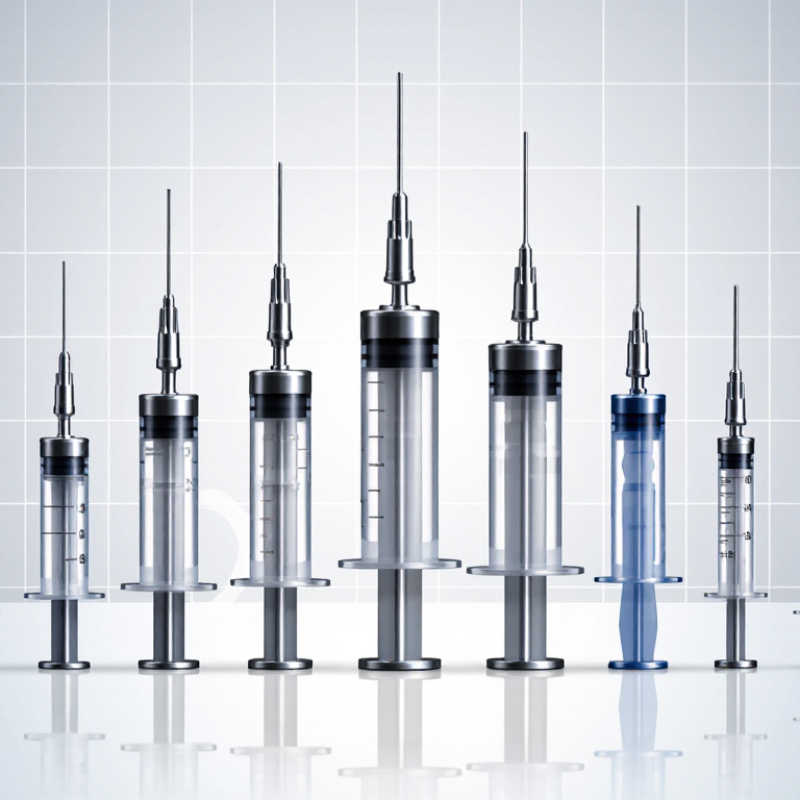
China’s stainless steel syringe market deserves careful examination, not a rushed ranking. Stainless Steel Syringes serve laboratories, veterinary practices, industrial dosing systems, and specialized medical applications. Each setting demands different priorities. Corrosion resistance matters near aggressive chemicals. Dimensional accuracy matters when a plunger moves through a narrow barrel. Surface finish matters when cleaning, sterilization, and repeated use are expected.
Materials expert J. R. Davis wrote, “Stainless steels are selected for their combination of corrosion resistance, strength, and fabricability.” That principle remains useful when comparing Chinese manufacturers. A polished barrel may look impressive, but appearance proves little. Buyers should examine steel grade, weld quality, leakage control, dimensional tolerances, and production consistency. Documentation also matters. Reliable suppliers should provide inspection records, traceable batches, and clear information about intended applications.
This guide reviews ten leading manufacturers through practical criteria rather than publicity alone. It considers manufacturing experience, engineering capability, quality systems, customization support, export performance, and customer feedback. A perfect ranking is impossible. Some companies publish limited technical data, while others communicate well but offer less visible production evidence. That uncertainty deserves attention.
The strongest manufacturer is not always the largest. A smaller factory may deliver better tolerances and faster engineering support. Another supplier may offer excellent pricing but weaker documentation. These differences can affect maintenance, safety, and long-term operating costs. Readers should verify certifications, sample performance, material composition, and after-sales service before purchasing. The following overview aims to provide a useful starting point, while recognizing that real-world validation remains essential.
Stainless steel syringe manufacturers in China are specialized medical-device producers. They design, machine, clean, inspect, and document syringe components. Their role extends beyond metal forming. They help hospitals, laboratories, and pharmaceutical facilities obtain consistent dosing tools. The World Health Organization estimates that about 16 billion injections occur worldwide each year. This figure highlights the importance of reliable syringe production. Small errors matter.
Manufacturers typically work with medical-grade stainless steel, precise barrels, plungers, needles, and seals. They control surface finish, dimensional tolerance, leakage, cleanliness, and packaging. ISO 13485 provides the quality-management framework used by many medical-device manufacturers. ISO 7886-1 also defines performance requirements for sterile, single-use syringes where applicable. China’s National Medical Products Administration requires registration, production controls, and traceable quality records. These requirements make a factory’s testing process as important as its machining capacity.
A capable supplier should provide material certificates, batch records, inspection data, and clear sterilization information. Factory audits can reveal practical details, such as segregated clean areas and calibrated measuring tools. Yet stainless steel does not automatically mean superior performance. A polished surface can still hide poor dimensional control. This category is not perfectly uniform. Buyers should compare evidence, not impressive photographs. The 2024 Grand View Research syringe market analysis also points to rising demand for higher-performance delivery systems, but market forecasts remain estimates, not guarantees.
Stainless steel syringe manufacturers in China produce reusable, corrosion-resistant instruments for laboratory sampling, chemical handling, chromatography, precision dispensing, and industrial testing. The chart presents ten commonly standardized nominal syringe capacities in milliliters. Actual stainless steel product ranges, fittings, pressure ratings, and applications vary by manufacturer and model.
Choosing among China’s top stainless steel syringe manufacturers requires more than comparing catalog prices. Evaluate material certificates, manufacturing experience, and traceability from steel coil to finished syringe. Ask whether the supplier can identify heat numbers, inspection dates, and operators for each batch. A reliable factory should explain its quality system clearly. It should provide controlled drawings, sampling records, and corrective-action reports when defects occur. Do not accept vague claims.
Product performance deserves direct verification. Review barrel dimensions, plunger fit, surface finish, dead space, and corrosion resistance. Request representative samples from normal production, not specially prepared units. Test them under your intended filling, storage, and sterilization conditions. Check packaging integrity and labeling accuracy after transport simulation. Also assess production capacity, lead times, tooling ownership, and change-control procedures. A polished audit can still miss daily process discipline. My practical mistake was trusting fast sample approval before checking repeatability across several lots.
Tips: Ask for three recent batch records, an independent material report, and a live factory video or audit. Compare answers with physical evidence. Confirm communication in writing. Small gaps matter.
China’s leading stainless steel syringe manufacturers stand out through precision, material control, and production consistency. A useful top-ten comparison should examine more than factory size. Buyers should review needle fit, barrel tolerance, plunger smoothness, and resistance to repeated sterilization. These details affect handling at the workbench.
Strong manufacturers often use medical-grade or laboratory-grade stainless steel, supported by heat-treatment and polishing controls. Their workshops may include CNC machining, ultrasonic cleaning, laser marking, and dimensional inspection. Traceability matters. Each production batch should connect to material records, inspection results, and packaging checks. Some suppliers also offer custom volumes, threaded connections, blunt tips, or specialized plungers. These options help research, sampling, and controlled dispensing applications.
From practical sourcing experience, communication can reveal more than a polished catalog. Reliable teams answer technical questions clearly and provide drawings, samples, and test data. They should explain leakage testing, surface roughness, cleaning methods, and storage conditions. However, no manufacturer is perfect. A low price may hide inconsistent tolerances or weak after-sales support. I would request independent sample testing before approving large quantities. Verify claimed certifications directly, because documents can become outdated. The best supplier is not always the largest one. It is the manufacturer that delivers stable dimensions, honest limitations, and repeatable quality across real production orders.
When assessing China’s top 10 stainless steel syringe manufacturers, product quality should lead the comparison. Reliable producers specify medical-grade stainless steel, often 304 or 316L, with controlled hardness and corrosion resistance. Every barrel, needle hub, and plunger interface needs careful dimensional control.
Small defects matter.
Inspectors should check burrs, surface scratches, weld marks, and uneven edges under magnification. Leak testing, tensile testing, and repeated plunger movement can reveal weaknesses. A cleanroom alone does not guarantee a dependable product. Manufacturing records, sampling plans, and traceability are equally important. One practical concern remains: some published specifications look stronger than actual batch performance. Independent verification is necessary.
Certifications help establish credibility. ISO 13485 indicates a medical-device quality system, while ISO 9001 supports broader process control. Relevant market approvals and sterilization validation should match the intended application. Buyers should request current certificates, test reports, and lot records, not scanned documents with unclear dates. Strong manufacturers can explain their audit history without avoiding difficult questions.
Manufacturing capability also separates serious suppliers from simple assemblers. Look for precision machining, automated cleaning, controlled assembly, and validated packaging lines. A capable factory should manage incoming steel inspection, in-process checks, final sampling, and complaint investigation. Site visits can reveal practical details, such as labeled containers, calibrated gauges, and separated material flows. Yet a single visit may miss night-shift problems. Ongoing audits and sample testing remain necessary.
| Rank | Manufacturer Profile | Primary Stainless Steel Syringe Focus | Typical Product Materials | Quality Management Certifications | Regulatory and Compliance Support | Manufacturing Capabilities | Cleanroom and Sterilization | Quality-Control Activities | Customization Capability |
|---|---|---|---|---|---|---|---|---|---|
| 1 | Profile A High-volume medical-device supplier | Stainless steel needle-and-syringe assemblies, disposable medical syringes, precision dosing components | 304 stainless steel316L optionalPPPEMedical silicone | ISO 13485-based quality system; ISO 9001 may be available for supporting operations | CE-marking technical documentation support; customer-specific FDA registration or submission support; ISO 10993 evaluation packages | Multi-stage stamping, tube forming, CNC or automatic needle processing, injection molding, automated assembly, printing, blister and pouch packing | ISO Class 7 or ISO Class 8 controlled areas; EO sterilization commonly available; gamma or e-beam subject to product validation | Dimensional inspection, visual inspection, needle-point examination, leakage testing, sliding-force testing, particulate and bioburden monitoring | Gauge, length, hub geometry, tip style, graduation printing, packaging configuration, sterile and non-sterile supply |
| 2 | Profile B Precision dosing specialist | Small-volume stainless steel syringes for laboratory, veterinary, pharmaceutical and industrial dosing | 316L304Borosilicate glassPTFESilicone | ISO 9001 commonly maintained; ISO 13485 available where products are supplied for medical applications | Material traceability records, RoHS and REACH declarations, sterilization validation documentation when applicable | Precision grinding, polishing, laser marking, micro-assembly, plunger fitting, leak-tightness control and low-volume clean assembly | Controlled assembly environment; EO, gamma and dry-heat options depend on material and customer validation requirements | Dead-volume measurement, dimensional tolerance checks, plunger-force testing, pressure-hold testing and surface-finish inspection | Custom capacities, Luer-lock or special connectors, fine graduations, low-dead-space designs and application-specific seals |
| 3 | Profile C Integrated metal-processing manufacturer | Reusable or disposable stainless steel syringe bodies, barrels, nozzles and precision fluid-delivery parts | 304L316L17-4PH for selected partsPP | ISO 9001 quality management; medical-device projects may be managed under ISO 13485 controls | Mill certificates, heat-number traceability, material declarations and customer quality agreements | Deep drawing, CNC turning, tube cutting, electropolishing, passivation, welding, laser marking and final assembly | Clean assembly areas available; passivation and electropolishing processes require documented validation and rinse control | Surface roughness, wall thickness, concentricity, weld integrity, corrosion-resistance checks and pressure testing | Custom wall thickness, connector design, surface treatment, length, capacity and component tolerances |
| 4 | Profile D OEM disposable-device producer | Single-use syringes, stainless steel cannula assemblies and prefilled or application-specific dosing systems | 316L needle componentsMedical-grade PPPE gasketSynthetic rubber | ISO 13485 quality controls typically applied to medical-device production; ISO 9001 support system | Device-history records, process validation, packaging validation, sterilization records and complaint-handling procedures | Automated assembly, needle bonding, cap fitting, plunger insertion, pouch packing and carton serialization support | ISO Class 7/8 assembly areas; EO sterilization is common, with gamma options subject to compatibility testing | Seal integrity, cap retention, plunger movement, needle attachment, visual defects, package integrity and sterility assurance review | Private-label packaging, artwork support, barcode or serialization, product configuration and customer-specific inspection plans |
| 5 | Profile E Veterinary and laboratory application supplier | Metal syringes and stainless steel dosing assemblies for veterinary, laboratory and industrial applications | 304 stainless steel316 stainless steelGlassPTFEEPDM | ISO 9001 commonly used; ISO 13485 may apply to medical-device product lines | Material certificates, product drawings, inspection reports and export documentation available by order | Tube forming, machining, polishing, gasket installation, manual or semi-automatic assembly and protective packaging | Non-sterile supply is common; sterilization can be outsourced or arranged according to the validated product configuration | Volume accuracy, leakage, dimensional inspection, corrosion checks, surface finish and repeated-use performance testing | Capacity, tip, plunger, seal material, graduation, handle design, packaging and application-specific accessories |
| 6 | Profile F High-precision OEM and contract manufacturer | Micro-volume syringes, stainless steel needles, dosing nozzles and custom fluid-path assemblies | 316L304PEEKPTFEMedical-grade polymer | ISO 9001; ISO 13485-oriented production controls may be implemented for regulated projects | Design-transfer support, risk-management files, process FMEA, inspection protocols and supplier traceability | Micro-machining, laser drilling, precision cutting, ultrasonic cleaning, automated or manual assembly and clean packaging | Controlled clean area; cleaning validation, ultrasonic cleaning and customer-specified sterilization arrangements | Microscopic inspection, flow-rate testing, leak testing, burr detection, dimensional CMM checks and cleanliness testing | Special tips, ports, tolerances, coatings, low-dead-volume designs, custom fixtures and engineering prototypes |
| 7 | Profile G Consumable medical-packaging supplier | Disposable stainless steel syringe sets with sterile barrier packaging and accessory components | 316L needleMedical-grade PPPESynthetic elastomer | ISO 13485 production framework commonly required for sterile disposable-device programs | Packaging validation, seal-strength testing, accelerated aging studies and transport simulation support | ISO Class 7/8 controlled production; EO sterilization and sterile barrier packaging are commonly supported | Package seal strength, dye-leak or bubble-leak testing, particulate control, bioburden, sterility and visual inspection | Blister, pouch, tray and kit packaging; custom labels, instructions, carton quantities and export-market documentation | |
| 8 | Profile H Industrial and pharmaceutical dosing specialist | Stainless steel dispensing syringes, filling needles, transfer components and high-accuracy dosing systems | 316L304Borosilicate glassPTFEFKM | ISO 9001 commonly used; GMP-aligned controls may be applied to pharmaceutical-contact components | Material traceability, cleaning records, extractables and leachables support, dimensional reports and batch documentation | Precision turning, electropolishing, passivation, clean assembly, filling-line component production and protective packing | Clean manufacturing areas; validated cleaning and sterilization routes selected according to product use and material compatibility | Pressure decay, flow consistency, surface roughness, cleanliness, dimensional accuracy and chemical compatibility evaluation | Custom volume, connector, needle length, surface finish, seal compound, coating and pharmaceutical-contact requirements |
| 9 | Profile I Flexible-volume production manufacturer | Standard and custom stainless steel syringe assemblies for medical, laboratory and industrial buyers | 304316LPPPESilicone | ISO 9001 quality system; ISO 13485 certification status should be verified for each medical-device project | Incoming inspection, batch traceability, first-article inspection, production inspection and final-release documentation | Injection molding, metal forming, assembly, printing, ultrasonic cleaning and standard protective packaging | Non-sterile and sterile supply options; EO or third-party sterilization may be arranged according to order requirements | Visual inspection, dimensional checks, leakage, plunger force, needle fixation, packaging and sampling-based functional tests | Low-to-medium volume prototypes, OEM packaging, custom graduations, material substitutions and mixed-size orders |
| 10 | Profile J Export-oriented stainless steel component supplier | Stainless steel syringe components, needles, barrels, connectors and assembled dosing products | 304/304L316/316LPPPTFEMedical elastomers | ISO 9001 is commonly available; medical-device certification and scope should be confirmed by product family | Certificate of conformity, inspection reports, material certificates, RoHS/REACH declarations and export documentation | Stamping, CNC machining, tube processing, passivation, polishing, assembly, labeling and export packing | Controlled assembly areas; sterilization can be provided through qualified external partners when required | Material verification, dimensional sampling, surface inspection, corrosion-resistance checks, leak testing and final visual inspection | Custom dimensions, surface finish, packaging, labeling, connector type, batch size and customer inspection standards |

Selecting the right Chinese stainless steel syringe manufacturer requires more than comparing prices. Start by checking the steel grade, surface finish, dimensional tolerance, and production experience. Medical-grade stainless steel should have clear material certificates and stable corrosion resistance. Ask for batch records, inspection reports, and traceability documents. Samples reveal a lot.
Review the factory’s quality system and process controls. Confirm whether technicians inspect barrel diameter, plunger movement, tip connection, and leakage performance. A reliable manufacturer should explain cleaning, packaging, and sterilization compatibility in precise terms. Request recent audit evidence, not only attractive photographs. Also check production capacity against your expected order volume. Low prices may reflect weaker inspection or inconsistent raw materials.
Communication matters during development. Send detailed drawings, application conditions, and acceptance standards before requesting a quotation. Evaluate how quickly the engineering team identifies risks. Can they discuss tolerances without vague promises? Can they provide corrective-action records when a sample fails? Small inconsistencies often appear between the first sample and mass production. Plan a pilot order and independent inspection when the application is sensitive. No supplier is perfect. Even experienced teams can miss a minor surface defect, especially during rushed delivery periods. A written quality agreement, change-control process, and clearly defined replacement policy can reduce that risk.