Skip to content

China Top Healthy Snack Suppliers for Global Buyers?

China Top Healthy Snack Suppliers for Global Buyers?

The global demand for better-for-you food is reshaping snack procurement. The 2024 IFIC Food & Health Survey reports that 73% of Americans snack at least once daily. Euromonitor International’s 2024 Health and Wellness research also highlights stronger interest in functional benefits, lower sugar, and recognizable ingredients. These signals matter for international buyers. They also require careful interpretation.

China offers broad manufacturing capacity, competitive pricing, and fast product development. Buyers can source roasted nuts, dried fruit, seed mixes, protein snacks, seaweed, and reduced-sugar products. However, product quality differs significantly between factories. A polished website proves very little. Buyers should verify HACCP or ISO 22000 systems, allergen controls, laboratory testing, traceability, and export experience. Packaging samples deserve attention. So do moisture levels, seal strength, and shelf-life results.

Nutrition expert Michael Pollan offers a simple principle: “Eat food. Not too much. Mostly plants.” His advice provides a useful filter for evaluating a healthy snack. A short ingredient list may be helpful, but it cannot replace independent testing. “Clean label” is not a universal technical standard. Some marketing claims remain difficult to compare across markets.

This guide examines China’s leading healthy snack suppliers for global buyers. It considers product range, certifications, minimum order quantities, customization, and communication quality. It also recognizes an uncomfortable truth: no supplier is perfect. A reliable partnership requires factory audits, product samples, clear specifications, and ongoing review. Small choices matter.
China Top Healthy Snack Suppliers for Global Buyers?

China’s Healthy Snack Supplier Landscape for Global Buyers

China’s healthy snack supplier landscape is broader than a factory list. It includes ingredient processors, OEM manufacturers, packaging specialists, and export trading firms. Common products include roasted nuts, dried fruit, seed mixes, seaweed snacks, and baked legume crisps. Suppliers often serve different market positions. Some focus on low minimum orders. Others prioritize customized formulas and retail-ready packaging. This variety helps global buyers, but it also complicates comparison.

A reliable evaluation starts with the production site, not a polished catalog. Ask for ingredient specifications, allergen controls, recent microbiological reports, and batch traceability records. HACCP, ISO 22000, BRCGS, or equivalent systems can support due diligence. However, a certificate alone proves little about daily discipline. Request samples from separate lots. Check texture, moisture, sweetness, seal strength, and label accuracy. For imported goods, confirm that documentation matches the destination market’s requirements. Requirements vary.

Cost discussions should include testing, tooling, cartons, storage, and realistic shipping lead times. A low unit price may hide high minimum quantities or inconsistent seasonal supply. Traceable sourcing matters especially for nuts, fruit, and agricultural ingredients. Ask whether suppliers can identify farms, processing dates, and corrective actions after a failed test. One imperfect but useful lesson is that communication speed does not equal manufacturing capability. A supplier may answer quickly and still miss a packaging detail. Small pilot orders reveal more than confident promises.

Key Product Categories Offered by Chinese Healthy Snack Manufacturers

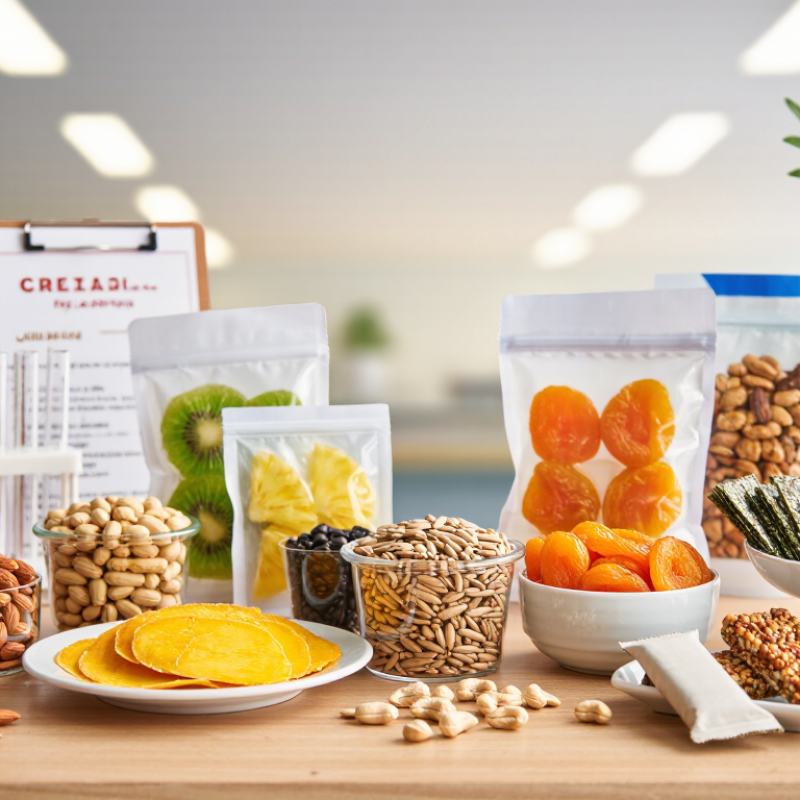
Chinese healthy snack manufacturers commonly supply roasted nuts, seed mixes, dried fruit, and low-sugar fruit pieces. These categories suit retailers seeking portable nutrition with familiar ingredients. During factory sampling, buyers should inspect crunch, moisture, oil migration, and seal strength. A walnut mix may look premium, yet uneven roasting can weaken repeat sales. Small details matter.

Protein-focused lines often include pea-protein bites, soy crisps, nut bars, and oat-based energy squares. Manufacturers also produce whole-grain crackers, rice snacks, vegetable chips, and air-popped grains. Reduced-sugar options may use dates, fruit concentrates, or limited sweeteners. Buyers should request ingredient percentages, allergen controls, nutrition panels, and shelf-life evidence. Healthy is not a universal technical claim. Regional rules differ, and translation errors remain a practical risk.

For children and active consumers, suppliers may offer portion packs, resealable pouches, and individually wrapped servings. Custom formulas can adjust salt, sweetness, texture, or protein content. However, customization often raises minimum order quantities and testing costs. I have seen attractive samples fail after transport because humidity entered weak cartons. Independent laboratory checks, production records, and lot-based traceability improve confidence. Even strong factories need scrutiny; supplier audits should review sanitation, worker training, and corrective actions instead of relying on polished presentations.

How to Evaluate Quality, Certifications, and Supplier Reliability

Global buyers should evaluate healthy snack suppliers beyond attractive packaging and low prices. McKinsey’s 2024 Future of Wellness report valued the global wellness market at more than US$1.8 trillion. This growth increases pressure on suppliers to prove ingredient quality, process control, and product consistency.

Request current certificates, not scanned documents from previous years. Useful evidence may include ISO 22000, HACCP, BRCGS, or equivalent third-party food safety certification. The ISO Survey 2023 recorded 1,265,216 ISO 9001 certificates worldwide, showing how widely quality systems are adopted. However, certification alone does not guarantee every production batch is safe. Check the certification scope, issuing body, audit date, and covered factory. Ask for recent laboratory reports, allergen controls, pesticide testing, and microbiological results. Test the lot.

Supplier reliability also depends on traceability and communication. Each carton should carry a clear lot code, production date, shelf-life information, and storage requirements. A dependable supplier can explain where ingredients came from and how quickly a recall could be managed. Review delivery records, complaint response times, minimum order quantities, and backup production capacity. Paper is not performance. A supplier may pass an audit yet struggle during seasonal demand. That possibility deserves honest discussion. Use trial orders before signing long-term agreements, and compare delivered samples with approved specifications. No scorecard is perfect; one missing document can reveal a serious blind spot.

Sourcing Process, Pricing Factors, and Export Considerations

China offers a wide range of healthy snack suppliers for global buyers. A reliable sourcing process starts with a clear product brief. Define ingredients, nutrition targets, package size, shelf life, and annual volume. Request samples before discussing large orders. Check factory capacity, food safety systems, batch records, and export experience. Video audits can help, but they cannot replace physical inspections.

Pricing depends on ingredients, processing methods, packaging materials, order volume, and product customization. Freight, insurance, testing, and port charges also affect the final landed cost. A low quotation may exclude printing plates, inner cartons, or laboratory tests. Ask for a detailed quotation with fixed validity dates. Payment terms deserve attention too. Small errors here can create expensive delays. No sourcing plan is perfect. Even experienced buyers sometimes underestimate seasonal ingredient changes.

Tips: Compare at least three suppliers. Keep one approved sample for reference. Confirm allergen statements and nutrition data before production. Check whether documents match the destination market’s import requirements. Review carton strength with a drop test. Leave time for customs questions and label corrections. A practical mistake is treating compliance as paperwork only; it should guide product design from the beginning.

Best Practices for Selecting a Long-Term Supplier in China

Selecting a long-term Chinese healthy snack supplier requires more than attractive samples. Ask how ingredients are approved, tested, and documented before production. A reliable team should provide batch records, allergen controls, shelf-life data, and traceability from raw material to packed carton. Request recent third-party test reports, but verify the laboratory and test scope. Paperwork matters. So does factory reality.

Before signing, compare pilot orders rather than relying on one tasting session. Check texture, flavor, seal strength, label accuracy, and carton protection after transport. Record every result. Suppliers should explain minimum order quantities, lead times, payment terms, and capacity during peak seasons. Clear answers reveal operational maturity. Vague promises create expensive delays. Small trial shipments often expose weaknesses hidden by polished presentations.

A factory visit can confirm hygiene zoning, storage temperature, pest controls, and employee practices. If travel is impossible, request a live video walkthrough and dated production evidence. Discuss corrective actions in writing, including response times and replacement procedures. Keep one approved sample for future comparisons. No system is perfect. Even experienced buyers can overlook humidity changes or seasonal ingredient variation. Review performance quarterly, while leaving room for honest supplier feedback.

Back To Top