
Skip to content

How to Choose the Best Glycine Powder Supplier?

Choosing the right Glycine Powder supplier is not just a price comparison. The product must fit its intended application, quality requirements, and handling conditions. A low quotation can look attractive, but gaps in documentation or delivery planning may cost more later. Details matter.

A dependable evaluation begins with clear, verifiable information. Review the product specification, batch-specific certificate of analysis, test methods, and traceability records. Ask for evidence. Confirm that the stated grade, purity, packaging, and shelf-life information match your needs, rather than relying on a product page alone. Where appropriate, ask how quality checks are performed and whether testing is conducted internally, independently, or both. Those distinctions should be explained, not assumed.

Supplier quality also shows in practical details: sealed, clearly labeled packaging; realistic lead times; responsive technical support; and consistent answers across sales and quality teams. Request samples when feasible, then assess them against documented criteria. No supplier is perfect. A polished brochure cannot prove every claim, and one delayed shipment does not automatically show poor quality. The useful question is whether the supplier can provide consistent evidence, explain limitations, and respond transparently when problems occur. This guide outlines a careful way to compare suppliers, identify questions worth asking, and balance cost with quality and reliability. The final choice should reflect your actual use case, not a generic ranking. Some judgment remains.
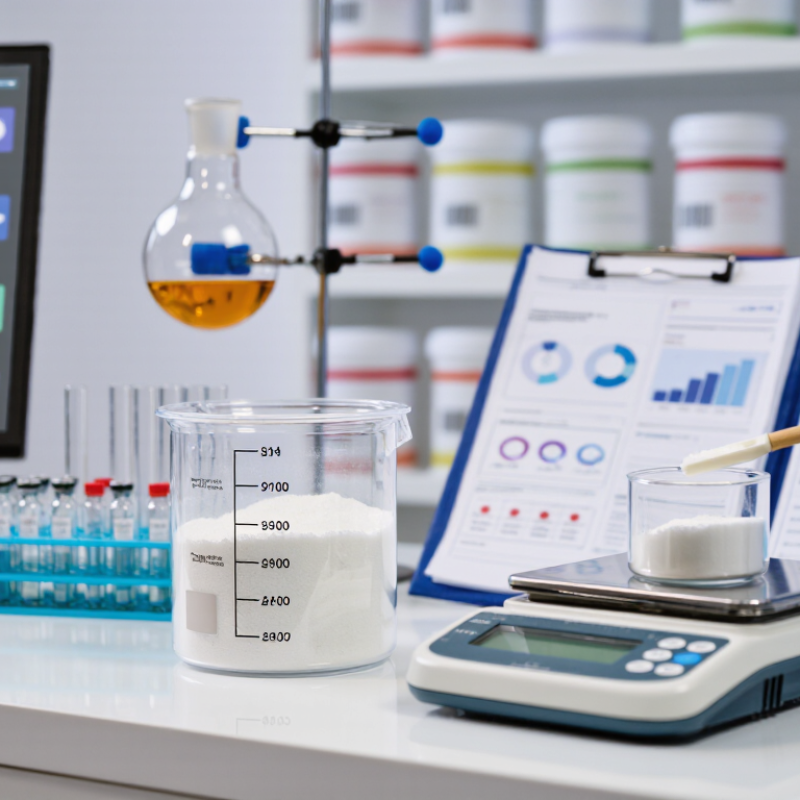
How to Choose the Best Glycine Powder Supplier?

Understanding Glycine Powder and Its Intended Applications

Glycine is a simple amino acid used across several industries, but its intended use determines what “good quality” means. Food applications may require food-grade specifications, while supplement or pharmaceutical uses can call for tighter controls on identity, assay, contaminants, and microbial limits. It is also used in manufacturing processes, where solubility and particle size may matter more than consumer-facing claims. Check the details.

Demand figures need careful reading. The Council for Responsible Nutrition’s 2024 Consumer Survey found that 75% of U.S. adults use dietary supplements. That figure describes the supplement category, not glycine specifically. It can provide market context, but it cannot prove demand for a particular amino acid or establish product effectiveness.

Before comparing suppliers, match the specification to the application. Review the certificate of analysis for the test method, assay result, moisture, and relevant contaminant limits; then confirm that the tested lot matches the offered batch. A polished document can still leave questions if methods or acceptance limits are missing. Ask for traceability records and packaging details, especially if powder will be stored in humid conditions. The right grade is not always the highest grade. It is the grade supported by clear, relevant evidence.

How to Choose a Glycine Powder Supplier: Key pKa Values for Buffer Applications

Glycine’s approximate aqueous pKa values at 25°C indicate the pH regions where it can contribute to buffering. Match the product’s grade and documentation to your intended application.

Buffering is most effective near each pKa. When evaluating suppliers, check the specification, purity, intended-use grade, and batch-specific certificate of analysis; confirm suitability for your formulation and applicable requirements.

Defining Your Required Grade, Specifications, and Order Volume

Choosing a glycine powder supplier starts with defining the powder’s intended use. Food, laboratory, and other technical applications may require different grades and documentation. Write down the required assay, moisture limit, particle size, and any impurity thresholds before requesting quotations. Be specific. “High purity” alone is not a useful specification.

Ask for a recent certificate of analysis tied to a production lot, not just a generic product sheet. Check that it reports the tests you need, such as assay and moisture content, and ask how results are verified. A small sample can help you assess flow, appearance, and performance in your process. Still, a sample does not guarantee every future lot will behave identically. Specifications can look tidy on paper; batches may vary slightly.

Order volume matters too. Estimate routine monthly demand, initial trial quantities, and likely peak requirements. Then confirm minimum order quantity, available pack sizes, lead time, and whether the supplier can maintain consistent lot documentation as volume grows. A low quoted price may be less helpful if it requires excess inventory or awkward packaging. I would leave some room for uncertainty in the forecast; purchasing plans are rarely perfect.

Checking Supplier Quality Systems and Production Standards

A dependable glycine powder supplier should show how quality controls work on the production floor. Ask for the current quality-system certificate, its scope, the latest audit date, and examples of corrective actions. A certificate alone is not proof that every batch meets specification. Check whether staff document equipment calibration, cleaning, and changes to raw-material sources.

The FDA’s 21 CFR Part 111.75(a)(1) requires an appropriate identity test or examination for each dietary ingredient component, subject to stated exceptions. The USP–NF Glycine monograph sets an assay range of 98.5%–101.5% on a dried basis. Use these references when reviewing specifications and certificates of analysis. Confirm that the supplier’s methods, sampling plan, and reported results align with the product’s intended grade. Details matter. A neat certificate can still reflect weak sampling.

Tips: Request a recent certificate of analysis tied to a specific lot, plus the test methods behind its identity and assay results. Ask how the supplier traces material from receipt through packing, and how it handles out-of-specification results. If possible, compare a retained sample with an independent laboratory result. I would not treat one successful test as proof of a stable process; review several lots and their variation.

How to Choose the Best Glycine Powder Supplier? — Checking Supplier Quality Systems and Production Standards

Evaluation Area What to Check Useful Evidence Why It Matters
Quality management system Confirm that documented procedures cover purchasing, production, testing, nonconformities, corrective actions, and document control. Current quality-system certificate, its scope and validity, audit summary, and sample procedures or records. A structured system supports consistent control of processes and changes. A certificate alone does not establish that a particular glycine product meets your specification.
Food safety controls For food or supplement applications, review hazard analysis, preventive controls, sanitation, allergen management where relevant, and food-safety monitoring. Food-safety plan or HACCP documentation, relevant audit results, sanitation records, and corrective-action records. Food-safety controls help identify and manage hazards associated with ingredients, processing, and handling.
Applicable certifications Check whether certifications suit the intended market and product use, and verify that the certified site and activities cover the supplied material. Certificate scope, issuing body, site address, validity dates, and confirmation through the certifier’s verification channel where available. Certification can provide evidence of an audited system, but its scope may not cover every product, site, or regulatory requirement.
Product specification Request a written specification defining identity, assay or purity, appearance, solubility or other relevant characteristics, and applicable test methods. Approved specification with revision number, acceptance criteria, methods, and change-control history. Clear, agreed criteria let both parties assess whether each lot is suitable for its intended application.
Identity and batch testing Ask how glycine identity and other specification attributes are tested, and whether testing is performed on each lot or at a stated frequency. Representative certificate of analysis (CoA), test methods, laboratory records, and details of any outsourced testing. A lot-specific CoA links reported results to a batch. Confirm that the listed methods and results address your specification.
Contaminant controls Review the risk-based testing and control plan for relevant contaminants, such as heavy metals, microbiological hazards, or process-related impurities. Risk assessment, applicable limits, recent test results, method information, and rationale for testing frequency. Relevant limits and testing needs depend on the product’s intended use, destination market, and applicable regulations.
Manufacturing and hygiene Understand the production flow, facility controls, cleaning practices, equipment maintenance, and measures to prevent mix-ups or cross-contamination. Process-flow overview, hygiene and cleaning procedures, maintenance records, and facility audit findings or corrective actions. Controlled manufacturing and handling practices reduce avoidable contamination and batch-to-batch variation risks.
Raw-material and process traceability Check whether the supplier can trace incoming materials through production, packaging, and dispatch to the finished lot. Lot coding system, sample traceability exercise, supplier-approval process, and mock-recall records. Traceability supports investigation, targeted withdrawal, and timely responses when a quality issue arises.
Packaging, storage, and transport Verify packaging suitability, tamper protection where applicable, storage conditions, shelf-life basis, and transport controls. Packaging specification, storage and handling instructions, shelf-life support, and shipping or warehouse records. Suitable handling helps protect material quality between release and receipt. Confirm requirements for your own storage and distribution conditions.
Change management and complaints Ask how changes to manufacturing site, process, specification, or test method are assessed and communicated; review complaint and corrective-action procedures. Change-notification policy, complaint procedure, corrective-action examples, and escalation contacts. Advance notice and documented follow-up help customers assess the impact of changes and investigate deviations.
Regulatory and application fit Confirm that the grade and documentation match the intended use, such as food, supplement, technical, or pharmacopoeial applications. Product-use statement, relevant declarations, market-specific documentation, and applicable compendial or regulatory references. Requirements vary by jurisdiction and application. Do not assume that one grade or certification is suitable for every use.

Note: Use these points as a supplier-screening checklist. Set acceptance limits and required documents according to the intended application, destination market, and applicable regulations; verify current documents and lot-specific records before purchase.

Reviewing Testing Methods, Traceability, and Product Documentation

Choosing a glycine powder supplier means looking beyond a clean specification sheet. Ask which identity and purity tests are performed on each lot, and which are periodic. Methods such as HPLC can help assess assay and related substances. Moisture testing also matters because fine powder can clump during storage. Request batch-specific results, not only a generic sample certificate. A number is useful only when its method, units, limits, and date are clear.

Traceability should connect the finished lot to production records and incoming raw materials. Check whether the supplier can provide a lot code, manufacturing date, origin information, and a documented process for investigating deviations. Product documents should include a current specification, certificate of analysis, safety data sheet, and storage guidance. Compare revision dates. A polished PDF can still be outdated; verify that the lot number on the paperwork matches the container before approving a shipment. Small checks matter.

Tips: Ask for a redacted sample record and follow one lot from receipt to release. Confirm who reviews out-of-range results and how corrections are recorded. Keep questions specific. Suppliers may answer slowly, which is a reason to pause—not an automatic rejection. Documentation has gaps sometimes; note them rather than assuming every missing field signals poor quality.

Comparing Pricing, Delivery Capabilities, and Supplier Reliability

A low quoted price can hide expensive gaps. Compare the full delivered cost of glycine powder, including freight, packaging, sample testing, insurance, and payment terms. Ask for quotes at the same purity specification, grade, order size, and delivery point. Otherwise, the comparison is not fair. A small price difference may disappear when expedited shipping or extra quality checks are added.

Delivery claims need evidence. The World Bank’s 2023 Logistics Performance Index assessed 139 economies across six areas, including customs, tracking and tracing, and timeliness. This country-level report is useful context, not proof that an individual supplier performs well. Request recent shipment records, typical lead times, and written procedures for delays. Check whether the supplier can provide lot-specific certificates of analysis and retain samples. Ask how quickly it responds when a document or test result is missing.

Reliability shows up in routine details. Does the quote identify the specification, packaging, dispatch date, and responsibility for freight? Can the supplier explain how it handles a late shipment or a batch that misses agreed parameters? Compare these answers across suppliers, then verify references where possible. Keep a small buffer for unexpected delays. No spreadsheet catches everything. And a polished sales reply is not the same as a dependable delivery record.

Back To Top