
How to Use Tempura Powder for Crispy Tempura?
How to Use Tempura Powder for Crispy Tempura?
Crispy tempura begins with more than a convenient mix. Tempura Powder can create a delicate shell when water temperature, mixing, and frying heat work together. The powder usually contains wheat flour, starch, leavening agents, and seasonings. Each blend behaves slightly differently. Read the package instructions before changing the ratio.
Chef Masaharu Morimoto is widely recognized for Japanese cooking expertise. His practical advice reflects a central tempura principle: “Keep the batter cold and do not overmix it.” This matters in a home kitchen. Cold batter helps limit gluten development. Gentle mixing leaves small lumps behind. Those lumps often become light, uneven ridges after frying.
Use chilled water, preferably between 5 and 10°C. Add it gradually to the Tempura Powder. Stir with chopsticks for only a few seconds. Do not aim for a smooth pancake batter. That is a common mistake. Dip dry seafood or vegetables into the batter. Excess moisture can cause splattering and a weak coating. Pat ingredients carefully before dipping.
Heat neutral oil to about 170–180°C. A wooden chopstick should release small, steady bubbles. Fry in small batches. Crowded oil cools quickly. The coating then absorbs oil instead of turning crisp. Shrimp may need two to three minutes, while thin vegetables cook faster. Drain pieces on a wire rack, not only paper towels.
Perfect results are not guaranteed. Humidity, ingredient temperature, and oil depth can change the texture. Taste one piece first. Adjust gently, rather than changing everything at once.
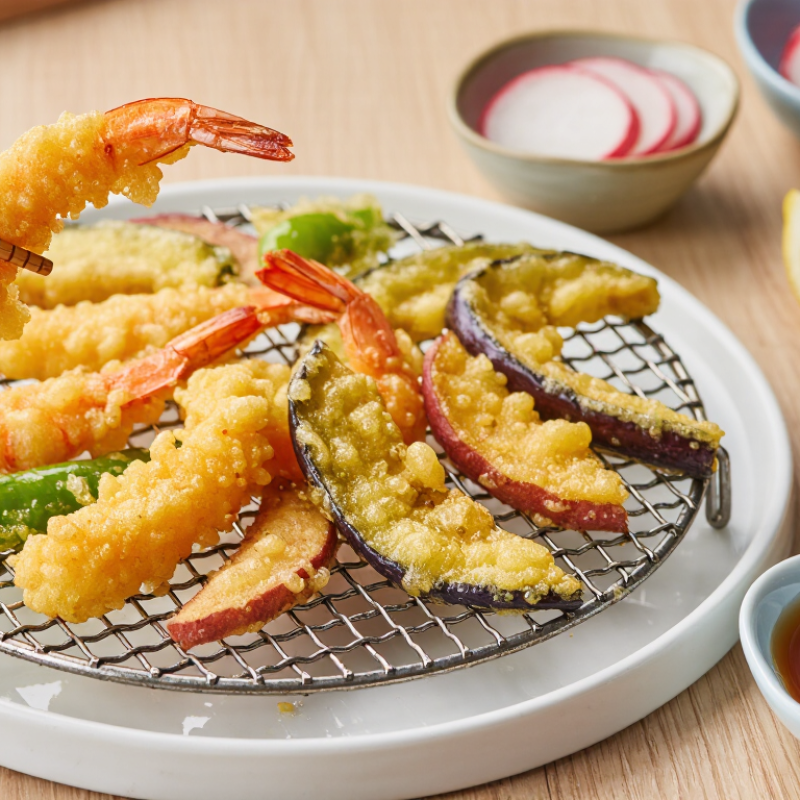
What Tempura Powder Is and Why It Creates a Crisp Coating
Tempura powder is a prepared dry mixture for making a light frying batter. It commonly contains wheat flour, starch, and a small amount of leavening. Some formulas may also include salt or dried egg. The starch limits gluten development, while flour provides enough structure to hold the coating. This balance helps vegetables, seafood, and mushrooms stay distinct beneath a thin crust.
Crispness begins with cold water. I mix the powder gently until a few small lumps remain. Overmixing develops gluten and creates a heavy, chewy shell. The cold batter also slows gluten formation and delays oil absorption. When the batter touches hot oil, water rapidly turns into steam. That steam pushes through the coating and leaves tiny pores behind. Those pores create the delicate crunch associated with good tempura.
In my kitchen, temperature control matters more than perfect batter smoothness. I keep the mixture cold and fry at about 170–180°C. A thermometer gives more reliable results than judging bubbles alone. Dry ingredients need a light dusting before dipping, especially with wet vegetables. My early batches were often too thick because I chased a completely even coating. That was a mistake. A slightly uneven surface can produce more texture, although excessive lumps may fall off during frying. Freshly fried tempura feels crispest, so I serve it soon after draining.
How to Use Tempura Powder for Crispy Tempura? - What Tempura Powder Is and Why It Creates a Crisp Coating
| Data Dimension | Typical Guideline | Why It Helps Create Crisp Tempura | Practical Cue |
|---|---|---|---|
| What tempura powder is | A dry premix commonly based on wheat flour and starch, often with a leavening agent and seasonings. | The blend reduces the need to measure several dry ingredients and can lower the proportion of gluten-forming flour. | Check the ingredient label because formulas differ by product. |
| Powder-to-water starting ratio | Use the package ratio as the primary guide; a common starting range is about 1 part powder to 1–1.5 parts cold water by volume. | A relatively thin batter forms a delicate shell instead of a heavy, dough-like coating. | Adjust with small amounts of water until the batter lightly coats the ingredient. |
| Water temperature | Use very cold water, approximately 0–10°C (32–50°F). | Cold batter slows gluten development and helps create a lighter, more irregular crust during frying. | Chilled water or water with a few ice cubes can be used; avoid adding unmelted ice to the batter. |
| Mixing technique | Stir briefly with chopsticks or a fork; a few small lumps are acceptable. | Minimal mixing limits gluten formation, which otherwise can make the coating chewy or dense. | Do not whisk until perfectly smooth and do not knead the batter. |
| Batter consistency | Thin and fluid, similar to light cream; it should cling in a narrow, uneven layer. | A thin coating loses moisture quickly and leaves more surface area for a crisp texture. | If it looks paste-like, add a little cold water; if it runs off completely, add a little powder. |
| Ingredient preparation | Pat ingredients dry and cut them into similarly sized pieces. | Excess surface moisture can cause splattering, loosen the batter, and delay browning. | Dust very moist ingredients lightly with dry tempura powder before dipping, if needed. |
| Frying temperature | Maintain approximately 170–180°C (338–356°F) for most vegetables and seafood. | This range allows water to evaporate quickly while the coating sets and browns without burning too fast. | Use a thermometer; the temperature drops when food is added, so avoid overcrowding. |
| Oil depth | Use enough oil for the pieces to float or remain mostly submerged without touching the pan base. | Adequate oil improves heat transfer and prevents the batter from sticking to the cooking surface. | Leave space between pieces so the oil can circulate. |
| Typical cooking time | Small seafood and thin vegetable pieces often take about 2–4 minutes; thicker pieces may require longer cooking. | The correct time cooks the center while allowing the exterior to become pale golden and crisp. | Use color, bubbling, and firmness as cues rather than time alone. |
| Handling after frying | Drain on a wire rack or angled paper towel and serve promptly. | Allowing steam to escape helps prevent the underside from becoming soggy. | Avoid stacking hot pieces. |
| Common causes of a soft coating | Warm batter, overmixing, wet ingredients, low oil temperature, or overcrowding the pan. | These conditions increase moisture retention or reduce the heat available for rapid crust formation. | Work in small batches and refresh the batter with cold water only when necessary. |