10 Best Gluten Free Healthy Snacks for Global Buyers
The global appetite for better-for-you snacking is changing what buyers place in their carts. Gluten free healthy snacks now attract consumers seeking convenient, portable, and clearly labeled food choices. The opportunity is substantial. Grand View Research valued the global gluten-free products market at approximately USD 6.45 billion in 2023. It also projects strong growth through 2030, supported by rising awareness of celiac disease and dietary preferences.
But “gluten-free” does not automatically mean nutritious. A colorful snack may still contain excessive sugar, sodium, or refined starch. This matters for importers, retailers, and foodservice buyers comparing suppliers across markets. The U.S. Food and Drug Administration permits a gluten-free claim below 20 parts per million of gluten. European rules use the same 20 mg/kg threshold under Regulation (EU) No 828/2014. Buyers should still request laboratory results, allergen controls, traceability records, and recognized certifications.
This guide examines ten practical snack categories for international purchasing. Think roasted chickpeas, seed crackers, fruit bars, nuts, and protein-focused bites. Each option needs closer inspection. Ingredient quality, shelf stability, packaging protection, and local labeling rules can change its commercial value. It is easy to overstate health benefits. We will not.
Data from Innova Market Insights and major market research firms shows growing interest in natural ingredients, high protein, and reduced sugar. However, consumer preferences differ sharply between regions. A snack popular in Germany may need different flavors and pack sizes in Southeast Asia. Taste still decides repeat purchases. This introduction supports evidence-led sourcing, while recognizing that no single product fits every buyer, market, or dietary need.
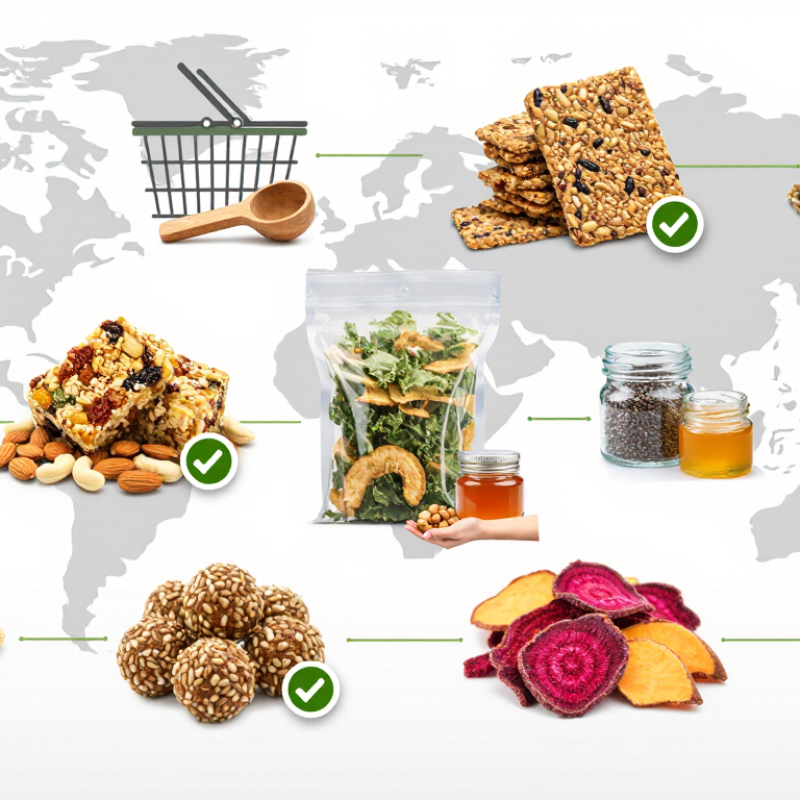
What Defines a Gluten-Free and Healthy Snack
What Defines a Gluten-Free and Healthy Snack
A gluten-free snack must meet more than a marketing promise. In the United States, the FDA requires “gluten-free” foods to contain less than 20 parts per million of gluten (FDA, 21 CFR 101.91). This standard supports people with celiac disease and gluten sensitivity. Reliable manufacturers also control cross-contact during ingredient handling, production, and packaging. A clean-looking label is not enough. Read the label.
Health depends on the complete nutritional profile. The USDA Dietary Guidelines for Americans, 2020–2025, encourages nutrient-dense foods with limited added sugars, sodium, and saturated fat. Therefore, a better snack may combine nuts, seeds, fruit, legumes, or whole gluten-free grains. It should offer useful fiber and protein, not only a gluten-free claim. A small seed bar with 5 grams of fiber can feel more satisfying than a sweet, low-fiber biscuit.
Independent verification also matters. Look for clear allergen statements, batch controls, and testing information. The Codex Alimentarius Standard 118-1979 uses the same 20 mg/kg gluten threshold, supporting international purchasing decisions. Market research shows rising demand: Grand View Research valued the global gluten-free products market at over 6 billion US dollars in 2022. Yet market growth can encourage weak claims and excessive packaging. In practical product reviews, I would check serving size, ingredient order, sugar content, and texture after opening. Texture matters. Some healthier formulas become dry or crumbly, and that weakness should be acknowledged.
10 Best Gluten Free Healthy Snacks for Global Buyers - What Defines a Gluten-Free and Healthy Snack
| # | Snack | Typical Serving | Energy (kcal) |
Protein (g) |
Fiber (g) |
Total Sugar (g) |
Healthy Characteristics | Gluten-Free Considerations |
|---|---|---|---|---|---|---|---|---|
| 1 | Air-Popped Popcorn | 3 cups, popped | 93 | 3.0 | 3.0 | 0.2 | Whole grain; naturally low in calories; provides fiber. | Use plain kernels and check seasonings for wheat-based additives or shared equipment. |
| 2 | Almonds | 28 g, approximately 23 almonds | 164 | 6.0 | 3.5 | 1.2 | Contains unsaturated fats, plant protein, magnesium, and vitamin E. | Naturally gluten-free; verify flavored or coated varieties and allergen controls. |
| 3 | Plain Greek Yogurt with Berries | 170 g yogurt plus 70 g berries | 140 | 17.0 | 2.5 | 12.0 | High in protein and calcium; berries add fiber and naturally occurring antioxidants. | Plain dairy is naturally gluten-free; check fruit preparations, granola toppings, and flavorings. |
| 4 | Hummus with Carrot and Cucumber Sticks | 60 g hummus with 150 g vegetables | 170 | 5.0 | 6.0 | 7.0 | Chickpeas provide plant protein and fiber; vegetables contribute hydration and micronutrients. | Naturally gluten-free when made with chickpeas, tahini, lemon, and oil; inspect added seasonings. |
| 5 | Roasted Chickpeas | 30 g, dry roasted | 120 | 6.0 | 5.0 | 2.0 | Crunchy source of plant protein, fiber, folate, and complex carbohydrates. | Naturally gluten-free; avoid malt-based seasonings and confirm dedicated processing where necessary. |
| 6 | Apple with Peanut Butter | 1 medium apple with 16 g peanut butter | 190 | 4.5 | 5.0 | 19.0 | Combines fruit fiber and carbohydrates with protein and unsaturated fats. | Naturally gluten-free; choose unsweetened peanut butter without malt or cookie ingredients. |
| 7 | Chia Seed Pudding | 25 g chia seeds with 150 ml unsweetened milk | 160 | 6.0 | 9.0 | 1.0 | Very high in fiber; chia seeds provide plant-based omega-3 fatty acids and minerals. | Chia seeds and plain milk are naturally gluten-free; check plant-milk stabilizers and flavorings. |
| 8 | Brown Rice Cakes with Avocado | 2 plain rice cakes with 50 g avocado | 170 | 3.0 | 4.0 | 1.0 | Provides whole-grain carbohydrates, fiber, potassium, and unsaturated fats. | Select rice cakes labeled gluten-free because shared production can introduce contamination. |
| 9 | Steamed Edamame | 100 g, shelled | 121 | 12.0 | 5.2 | 2.2 | High-quality plant protein with fiber, iron, folate, and vitamin K. | Plain soybeans are naturally gluten-free; avoid sauces containing regular soy sauce or wheat. |
| 10 | Pumpkin Seeds | 28 g, shelled | 151 | 7.0 | 1.7 | 0.4 | Provides plant protein, magnesium, zinc, iron, and unsaturated fats. | Naturally gluten-free; confirm that roasted, salted, or seasoned versions have no wheat-containing additives. |
Nutrient figures are approximate values based on standard food-composition data and may vary according to portion size, preparation method, and formulation. For people with celiac disease or medically diagnosed gluten sensitivity, choose products with reliable gluten-free controls and review the local product label.
Related Posts
-
10 Gluten Free Snack Ideas and Buying Tips?
-
Top 10 Gluten Free Healthy Snacks You Need to Try Now?
-
Gluten Free Snack Ideas Everyone Loves for Every Occasion?
-
2026 Best Gluten Free Snack Ideas for Healthy Eating?
-
What is the Best Gluten Free Healthy Snacks for You?
-
Top 10 Gluten Free Healthy Snacks You Can Enjoy Anytime