How to Find Reliable Plant Based Snack Suppliers?
A dependable plant based snack supplier does more than ship attractive cartons. Buyers need consistent recipes, clear ingredient records, reliable delivery windows, and honest answers when a batch changes. The details matter: a crisp chickpea bite can lose its texture after humid storage, while a small label revision can complicate approval. Looks simple. It often isn’t.
The Good Food Institute and Plant Based Foods Association reported that U.S. plant-based food retail sales reached $8.1 billion in 2023. That figure covers the broader category, not snacks alone, so it should not be treated as a snack-market forecast. Still, it signals a sizable and evolving market. Bruce Friedrich, co-founder and president of the Good Food Institute, has put the broader challenge this way: “We need to make meat from plants and cultivated meat.” His point is about building appealing alternatives; for snack buyers, supplier capability and product quality make that ambition practical.
This guide will examine how to check a supplier’s ingredient traceability, food-safety documentation, production capacity, and quality controls. Ask for specifications, allergen procedures, recent test records, and samples from more than one production run. Then compare lead times, minimum orders, packaging options, and communication habits. A polished sample is useful, but not proof of consistency. Even a tidy audit file can leave unanswered questions. Reliable sourcing takes verification, and sometimes a second conversation.
Define Your Plant-Based Snack Requirements
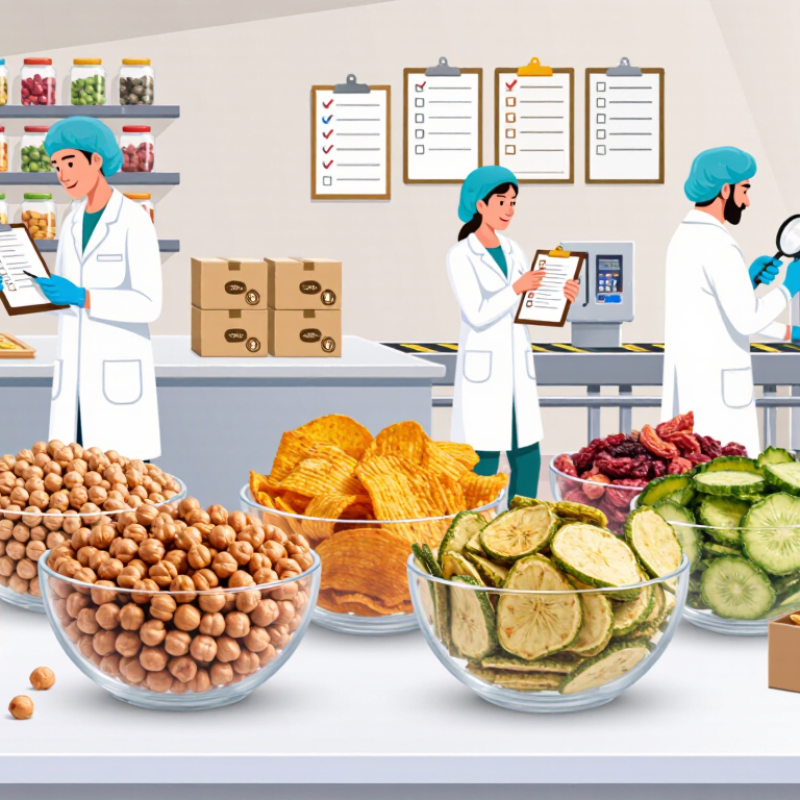
Define the snack before contacting suppliers. Specify the format, such as roasted chickpeas, seed clusters, or fruit bars, and set target pack size, shelf life, texture, and price. State whether “plant-based” means fully vegan or simply free from particular ingredients. List priority allergens and cross-contact controls, too. A label alone is not enough; request ingredient specifications and written allergen procedures. Small details matter. For example, should a bar stay chewy after months in a warm delivery truck, or remain crisp in a humid shop?
Set measurable nutrition and sourcing targets. Decide acceptable ranges for protein, fiber, added sugar, sodium, and serving size, then identify ingredients you will not accept. The Good Food Institute and SPINS reported U.S. plant-based food retail sales of $8.1 billion in 2023. That broad market figure does not prove demand for your exact snack, but it supports careful category research before setting order volumes. Compare competing products and test samples with real customers. A common planning mistake is choosing a supplier before agreeing on specifications. It can lead to repeated reformulations. Some targets may conflict: more protein can change taste, texture, or cost. Record which requirements are essential and which can flex, then ask suppliers for batch-level quality records and realistic production minimums. Don’t guess. A simple scorecard makes their answers easier to compare.
How to Find Reliable Plant-Based Snack Suppliers? — Define Your Plant-Based Snack Requirements
| Requirement | What to Define Before Sourcing | Useful Supplier Evidence | Practical Acceptance Criteria |
|---|---|---|---|
| Plant-based definition | Specify whether the product must contain no animal-derived ingredients, including dairy, eggs, honey, gelatin, or animal-derived processing aids where relevant. | Full ingredient list, product specification, and written confirmation of ingredient and processing-aid status. | All ingredients and relevant processing aids meet the buyer’s stated plant-based definition; exceptions are clearly disclosed. |
| Product format and use | Identify the snack type, such as bars, roasted legumes, crackers, chips, or dried fruit, plus serving occasion and intended consumer. | Product descriptions, sample formats, ingredient declarations, and available pack sizes. | Samples match the intended format, texture, portion size, and use occasion. |
| Allergen controls | List allergens to exclude or declare, and decide whether shared-equipment or shared-facility statements are acceptable for the target market. | Allergen matrix, facility or line-control information, cleaning procedures, and label declarations. | Controls and labeling address applicable local rules and the buyer’s risk requirements; cross-contact limitations are disclosed. |
| Nutrition and claims | Set target values for serving size, calories, protein, fiber, sugars, sodium, and any claims such as “high protein” or “no added sugar.” | Nutrition analysis, product specification, and supporting documentation for proposed claims. | Values meet the agreed specification, and any nutrition or marketing claim is substantiated and permitted in the intended market. |
| Ingredient standards | Define preferences for ingredient type, origin, processing, and exclusions, such as artificial colors, certain sweeteners, or genetically modified ingredients. | Ingredient declarations, supplier statements, and certificates or test reports where applicable. | Requirements are written as measurable specifications; any unavailable or unverified attribute is identified before approval. |
| Food safety and traceability | Determine the food-safety controls and traceability information required for the product and sales market. | Current food-safety certificates where applicable, hazard-control information, lot coding details, and a sample traceability record. | Records can connect finished-product lots to relevant production and ingredient records; certification scope and validity are checked. |
| Certifications and market access | Identify whether third-party plant-based, organic, allergen, or other certification is required, and specify the destination market. | Current certificates, scope documents, product listings where available, and market-specific compliance documents. | Certificates cover the relevant product and facility, are current, and meet the buyer’s market and customer requirements. |
| Shelf life and storage | Set the minimum remaining shelf life required at delivery and define storage conditions, such as ambient, chilled, or frozen. | Shelf-life specification, storage instructions, date coding details, and supporting stability information. | Product arrives within the agreed date window and can be stored and distributed under the stated conditions. |
| Packaging and labeling | Define pack size, materials, case configuration, language, barcode needs, and required label information. | Packaging specifications, draft artwork or label copy, case dimensions, and packaging-material details. | Packaging protects the product through expected handling, and label content meets destination-market requirements. |
| Quality and sensory profile | Set expectations for taste, aroma, texture, appearance, and acceptable variation between production lots. | Representative samples, quality specification, defect limits, and lot-release procedures. | Approved samples and written specifications form the reference for quality checks and future shipments. |
| Supply capacity and lead time | Estimate initial order size, recurring demand, seasonal changes, delivery schedule, and acceptable lead time. | Capacity information, production schedule, lead-time estimates, and minimum-order details. | Capacity and lead times support the forecast; minimum order quantities and constraints are clear before ordering. |
| Cost and commercial terms | Set target cost, currency, delivery terms, payment expectations, and any costs for packaging, samples, or testing. | Itemized quotation, applicable delivery terms, payment terms, and details of additional charges. | Quotes are comparable on the same product, pack size, order quantity, and delivery basis. |
Related Posts
-

How to Create Easy and Delicious Appetizer Ideas for Your Next Party?
-

2026 How to Create Delicious Appetizer Ideas for Any Occasion?
-
10 Best Snack Pellet Suppliers for Global Buyers
-
Top 5 Best Healthy Snacks You Need to Try for a Guilt Free Indulgence
-
Top Snack Foods in China What Should Global Buyers Know
-
10 Healthy Snack Options That Will Keep You Energized All Day Long