China Top 10 Extruded Snack Suppliers for Global Buyers?
Choosing an extruded snack supplier is not simply a matter of comparing catalog prices. Global buyers must examine processing experience, ingredient control, equipment capability, packaging strength, and export reliability. A bright sample may look impressive. However, its texture can soften after weeks in a humid warehouse.
Dr. Mian N. Riaz, a recognized food extrusion specialist at Texas A&M University, has described extrusion as “a versatile process for producing many types of foods.” His observation reflects the broad technical demands behind every successful extruded snack. Temperature, moisture, screw speed, die design, and seasoning adhesion can change the final product significantly. Small adjustments matter.
This guide introduces ten leading extruded snack suppliers for international buyers. It considers product variety, manufacturing scale, quality systems, customization, private-label support, and communication performance. Factory images alone are not enough. Buyers should request current certifications, product specifications, shelf-life data, and representative samples before making decisions.
The ranking is useful, but not perfect. Supplier performance may vary by region, product category, order size, and changing production schedules. A company strong in corn curls may not excel in protein snacks or fortified cereals. That distinction deserves attention.
Our aim is practical evaluation, not exaggerated promotion. Each supplier should be viewed through the buyer’s actual requirements, including target market, packaging format, shipping conditions, and expected annual volume. The best partner is rarely the cheapest option. It is the supplier that can deliver consistent texture, safe production, clear documentation, and dependable support when problems appear.
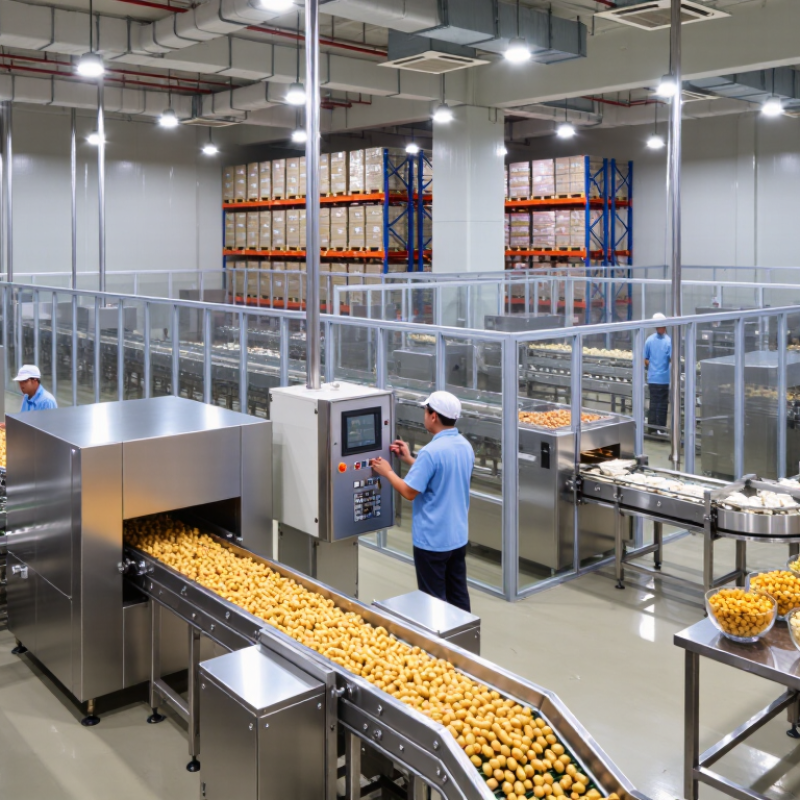
What Are Extruded Snacks and Why Source Them from China?
Extruded snacks are produced by pushing a moistened cereal or starch blend through a heated die. Heat, pressure, and shear create crisp textures and distinctive shapes. The process can use corn, rice, wheat, peas, or blended grains. It also supports seasoning changes for different markets. USDA Foreign Agricultural Service estimated China’s 2023/24 corn production at about 277 million metric tons. This large agricultural base can support stable ingredient sourcing and competitive production costs.
China is attractive to global buyers because its factories offer flexible equipment, high-volume production, and export-oriented quality controls. Experienced suppliers can manage particle size, moisture, expansion ratio, and packaging performance. These details matter during ocean transport. Codex Alimentarius hygiene principles and ISO 22000 or HACCP systems provide useful benchmarks for supplier audits. Still, the lowest quotation can mislead. I have seen small formula changes affect crunch, color, and shelf life. Cost is only one part of the decision.
Tips: Request pilot samples from the same production line. Test moisture, microbiology, allergen controls, and packaging seals. Ask for recent laboratory reports and full ingredient specifications. Confirm whether the supplier can meet your destination’s labeling and additive rules. Do not approve samples by taste alone. Compare texture after several weeks in realistic storage conditions. That step is often missed.
How to Evaluate China’s Leading Extruded Snack Suppliers
China Top 10 Extruded Snack Suppliers for Global Buyers
How to Evaluate China’s Leading Extruded Snack Suppliers
A serious supplier review should begin with process evidence, not a polished showroom. Check extrusion temperature records, moisture targets, seasoning uniformity, and metal-detector verification. Ask for three production batches, not one attractive sample. The FAO and WHO estimate that contaminated food causes about 600 million illnesses and 420,000 deaths globally each year. Therefore, request HACCP plans, allergen controls, sanitation logs, and recent third-party test reports.
Capacity needs verification. Compare the supplier’s declared monthly output with machine counts, shift schedules, warehouse space, and packaging lines. A 2024 USDA Foreign Agricultural Service report on China’s food-processing sector highlights the importance of modern processing and cold-chain infrastructure for consistent food quality. Extruded snacks may not require frozen storage, but heat, humidity, and poor sealing can still damage texture quickly. Check oxygen transmission, carton strength, and shelf-life testing under realistic shipping conditions.
Look beyond certificates. Verify whether certification covers the actual factory and product category. Review export experience, ingredient traceability, recall procedures, and response time for corrective actions. The details matter. A supplier offering unusually low prices may be using thinner packaging, weaker seasoning controls, or optimistic yield calculations. I would also score communication, because unclear batch records can become expensive after arrival. No evaluation is perfect; even a strong audit can miss seasonal staffing problems or inconsistent raw materials.
China’s Top 10 Extruded Snack Suppliers for Global Buyers
China’s Top 10 Extruded Snack Suppliers for Global Buyers
China’s top ten extruded snack suppliers serve importers with different product and packaging needs. A practical review should examine more than factory size. I would check ingredient traceability, extrusion temperature records, metal detection, allergen controls, and export experience. These details reveal daily operating discipline.
The selected suppliers commonly produce corn curls, rice puffs, wheat snacks, cereal bites, and customized shapes. Some operate twin-screw extrusion lines for better texture control. Others focus on private-label production, seasoning development, or small retail packs. Requesting samples is essential. A crunchy sample can soften during a six-week sea shipment.
Reliable suppliers should provide current food safety certificates, batch records, nutrition data, and clear packaging specifications. Buyers should also confirm minimum order quantities, carton strength, pallet patterns, and production lead times. Clear communication matters when recipes change. One overlooked issue is language accuracy on labels and technical documents.
This supplier group is not perfect. Some factories may have strong equipment but limited overseas service. Others may offer attractive prices while lacking flexible packaging options. Independent audits and trial orders remain wise. A low quotation is not always a low total cost. Hidden delays, damaged cartons, or inconsistent seasoning can quickly reduce the margin.
What Products, Services, and Markets Do These Suppliers Offer?
China’s top ten extruded snack suppliers serve more than domestic demand. They produce corn curls, rice crackers, pea-based snacks, pellet snacks, and shaped cereal products. Grand View Research identifies Asia-Pacific as a leading regional market for extruded snacks, supported by urbanization and convenient eating habits. This creates opportunities for private-label buyers, foodservice distributors, and supermarket importers.
Their services commonly include recipe development, OEM production, seasoning adjustment, and flexible packaging. Some factories provide metal detection, batch traceability, laboratory testing, and export documentation. Buyers should request allergen controls, microbiological results, and certificates matching the destination market. IMARC Group reports continued growth in the global savory snacks sector, but market estimates differ by product definition. That difference matters.
These suppliers reach Southeast Asia, the Middle East, Africa, Europe, and the Americas through distributors and direct contracts. Product formats may include small single-serve bags, family packs, and bulk cartons for repacking. Many can adjust salt, spice intensity, texture, and package language. However, “customization” sometimes means limited formula changes. Ask for pilot samples, production photos, loading records, and a clear defect policy. Euromonitor’s snack research also shows rising interest in convenient and better-perceived products, yet buyers should not assume every puffed snack meets nutritional expectations. Some catalogs remain too broad. A focused product test is safer.
China’s Extruded Snack Supplier Landscape for Global Buyers
The chart compares common product categories, buyer services, and export market groups offered by Chinese extruded snack manufacturers. The values represent a normalized capability index from 1 to 10, not company-specific sales or market-share data.
How Can Global Buyers Choose the Right Chinese Supplier?
Choosing among China’s top extruded snack suppliers requires more than comparing online catalogs. Global buyers should verify factory experience, product consistency, and export capability. Ask for production photos, audit records, ingredient specifications, and recent test reports. A reliable supplier should explain extrusion temperature, moisture control, seasoning methods, and packaging options clearly.
Request samples from the same production line used for bulk orders. Check crunch, flavor uniformity, oil residue, seal strength, and shelf-life performance. Confirm minimum order quantities, lead times, carton dimensions, and storage conditions. Independent laboratory testing can verify allergens, additives, microbiological safety, and compliance with the destination market. Do not rely on attractive prices alone. A low quote may hide unstable raw materials or weak quality control.
Tips: Visit the facility when possible, or arrange a live video inspection. Compare at least three suppliers using the same checklist. Review payment terms carefully and keep product specifications in writing. Ask how the supplier handles rejected batches, delayed shipments, and packaging defects. Communication speed matters, but careful answers matter more. Some buyers focus too heavily on factory size; that can be a mistake. A smaller producer may offer closer technical support, while a large plant may provide stronger capacity. The right choice depends on your market, launch volume, and risk tolerance. Recheck every claim before signing.