What Is a Healthy Snack for Global Buyers?
Global buyers are asking a practical question: what makes a healthy snack trustworthy across different markets? The answer involves more than low sugar or attractive packaging. A credible healthy snack should offer useful nutrition, recognizable ingredients, safe production, and a taste people genuinely enjoy. It should also fit local eating habits, price expectations, and labeling requirements.
Dr. David Katz, a physician and public health expert, has said, “The best diet is the one you can sustain for life.” This principle applies to snacks as well. A product may contain oats, nuts, fruit, or legumes, but its value depends on portion size, preparation, and regular use. A shelf-stable bar may suit a busy commuter in London. A roasted chickpea snack may feel more natural to buyers in Mumbai or Dubai. Context matters.
Still, no product can satisfy every market perfectly. “Healthy” is not a universal promise. Some buyers prioritize high protein, while others avoid allergens, excessive sodium, or added sweeteners. Global sourcing can also create difficult questions about traceability and environmental impact. These details deserve careful evidence, not vague claims. Buyers should examine nutrition panels, certifications, supplier audits, and consumer feedback before making decisions. The right healthy snack is therefore a balanced product, not a fashionable label. It supports wellbeing, respects local expectations, and remains realistic for everyday consumption. Sometimes, the simplest option works best. Yet even that judgment requires testing, transparency, and a willingness to improve.
What Defines a Healthy Snack for Global Buyers?
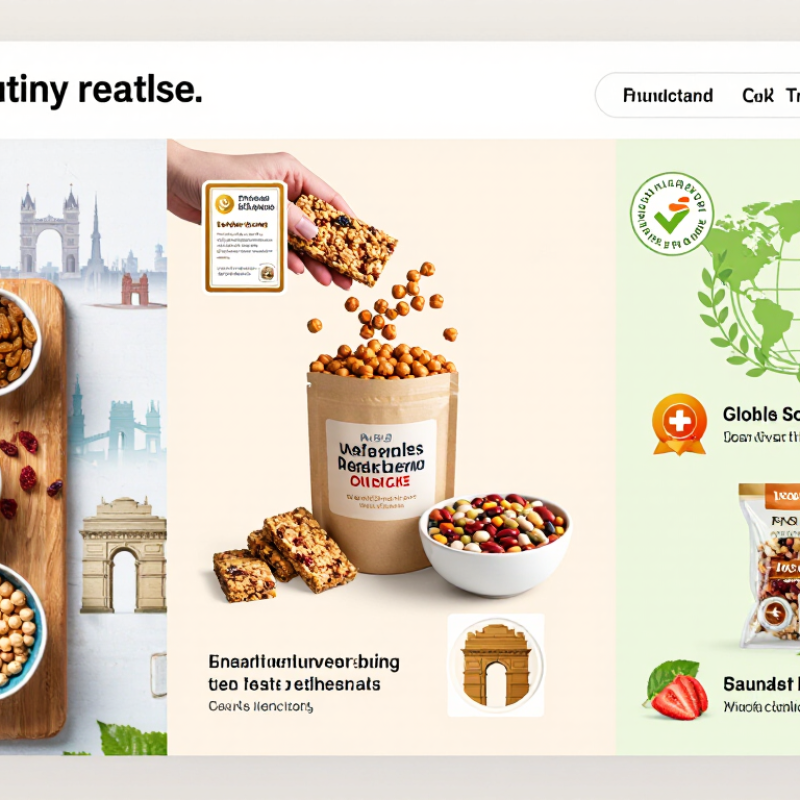
A healthy snack for global buyers is not defined by one universal recipe. It is defined by clear nutrition, safe ingredients, and suitability for local consumers. A practical buyer should check fiber, protein, added sugar, sodium, and saturated fat per serving. Portion size matters too. A small package can still contain excessive calories.
Read the label carefully. Ingredient order reveals what the product contains most. Whole grains, nuts, seeds, dried fruit, or legumes may offer useful nutrients, but processing changes the picture. Sweetened dried fruit can raise sugar quickly. Roasted snacks may carry extra sodium or oil. “Natural” does not automatically mean healthy. Nor does a short ingredient list guarantee balanced nutrition.
Global buyers also need reliable safety evidence. Suppliers should provide current specifications, allergen controls, shelf-life data, and testing from qualified laboratories. Local labeling rules must be checked before purchase. Requirements differ across markets, especially for nutrition claims and allergens. Packaging should protect the snack from moisture, heat, and contamination during shipping. Small details matter.
Taste and affordability cannot be ignored. A nutritious snack that consumers reject will not create lasting value. Buyers can compare trial batches with real users and review feedback honestly. Some assumptions may fail. For example, a low-sugar product may taste too dry, while a high-protein option may feel heavy. Health is important, but practical acceptance remains part of the definition.
What Is a Healthy Snack for Global Buyers?
What Defines a Healthy Snack for Global Buyers?
| Evaluation Dimension | Evidence-Based Reference | Practical Healthy-Snack Target | Why It Matters to Global Buyers | Recommended Verification |
|---|---|---|---|---|
| Added and Free Sugars | The World Health Organization recommends limiting free sugars to less than 10% of total daily energy intake, with additional benefits below 5%. | Prefer unsweetened or lightly sweetened products; avoid using sugar, syrups, honey, or concentrated fruit juice as the main sweetening base. | Lower-sugar products are easier to position for health-conscious consumers and align with public-health guidance in multiple markets. | Review the ingredient list and nutrition declaration; distinguish naturally occurring sugars from added or free sugars where local rules require it. |
| Sodium and Salt | WHO recommends that adults consume less than 2,000 mg of sodium per day, equivalent to less than 5 g of salt per day. | Choose snacks with modest sodium per serving and avoid heavily salted coatings, seasoning blends, and processed fillings. | Sodium is a widely recognized nutrition concern, and lower-sodium products can meet more retail and institutional purchasing requirements. | Check sodium per 100 g and per serving; verify whether the declared amount includes all seasoning components. |
| Dietary Fibre | The European Food Safety Authority considers an intake of 25 g of dietary fibre per day adequate for normal bowel function in adults. | Use whole grains, legumes, nuts, seeds, vegetables, or fruit ingredients and provide a meaningful fibre contribution per serving. | Fibre supports satiety and digestive-health positioning while accommodating plant-forward product preferences. | Confirm fibre content through laboratory analysis and ensure any fibre claim follows the destination market’s legal threshold. |
| Fat Quality | WHO advises limiting saturated fat to less than 10% of total daily energy intake and avoiding industrially produced trans fats. | Prioritize unsaturated fat sources such as nuts, seeds, and plant oils; avoid partially hydrogenated oils and minimize high-saturated-fat formulations. | Fat quality is more informative than total fat alone and is increasingly relevant to nutrition-conscious procurement decisions. | Review the oil specification, saturated-fat declaration, and trans-fat compliance for each destination market. |
| Protein and Nutrient Density | Protein needs vary by age, body size, activity level, and local dietary guidance; there is no single universal healthy-snack protein threshold. | Combine nutrient-dense ingredients such as legumes, dairy ingredients, nuts, seeds, or whole grains rather than relying mainly on refined starch. | Balanced nutrient density supports portion control and helps buyers serve consumers seeking sustained energy between meals. | Use a complete nutrition panel and avoid implying that high protein alone makes a product healthy. |
| Portion and Energy Control | Energy requirements differ by individual and population; public-health guidance emphasizes balanced diets and appropriate portion sizes rather than one fixed snack calorie limit. | Offer clearly defined, convenient portions with transparent calories per serving and per 100 g where required. | Clear portion information helps retailers, food-service buyers, and consumers compare products across markets. | Standardize serving size, declare pack servings, and ensure the nutrition panel uses the destination country’s format. |
| Ingredient Transparency | Food labels should provide accurate ingredient and nutrition information, while allergen disclosure requirements vary by jurisdiction. | Use a clear ingredient list, recognizable food ingredients, accurate nutrition data, and prominent allergen communication. | Transparent labeling reduces compliance risk and supports buyers serving consumers with dietary restrictions. | Conduct regulatory review for ingredients, allergens, nutrition claims, translations, and country-specific labeling rules. |
| Food Safety and Shelf Stability | Codex food-hygiene principles emphasize prevention of contamination throughout production, storage, transport, and distribution. | Maintain validated processing controls, suitable packaging, traceability, and a shelf life appropriate for international logistics. | Safety, consistency, and reliable shelf life are essential for cross-border procurement and reduce avoidable product losses. | Use hazard analysis, microbiological testing where appropriate, batch traceability, and documented shelf-life validation. |
Reference framework: World Health Organization guidance on healthy diets, sugars, sodium, fats, and trans fats; European Food Safety Authority dietary reference values for fibre; Codex Alimentarius principles for food hygiene. Nutrition targets and labeling requirements should be checked against the regulations of each destination market.
Related Posts
-
China Top Healthy Snack Suppliers for Global Buyers?
-
Top 10 Healthy Snack Brands You Need to Know?
-
Top Healthy Snack Brands in China to Boost Your Sales?
-
2026 Best Healthy Snacks for Global Buyers to Try
-
Top 10 Best Snacks for 2023: Unveiling the Healthiest Choices Supported by Nutrition Experts
-
What is the Best Healthy Snacks for Weight Loss and Energy Boosting