Why Healthy Snack Ideas Matter to Global Buyers?
Why do healthy snack ideas matter to global buyers? The answer begins with changing eating routines, not fashionable packaging. Consumers now seek convenient foods that support energy, satiety, and everyday wellbeing. In its 2024 Food & Health Survey, the International Food Information Council reported that 73% of Americans snack at least twice daily. This habit creates a serious commercial opportunity for manufacturers, retailers, and private-label buyers.
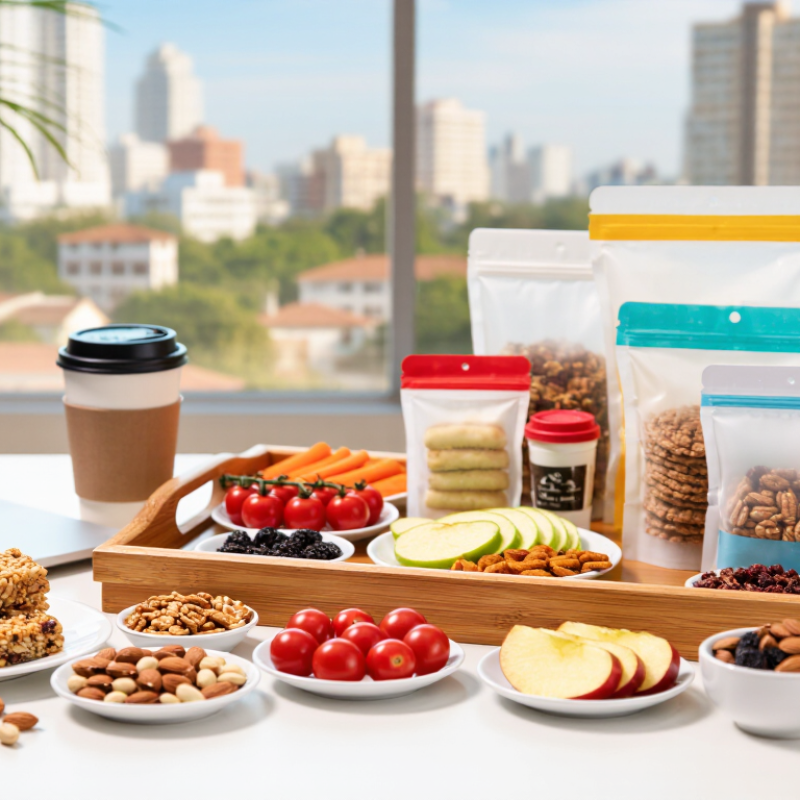
The market is expanding, but buyers need evidence beyond attractive claims. Mordor Intelligence estimates that the global healthy snacks market could grow from approximately USD 97 billion in 2024 to more than USD 132 billion by 2029. Its forecast suggests a compound annual growth rate above 6%. Meanwhile, NielsenIQ’s global consumer research has repeatedly shown stronger willingness to pay for products offering functional or nutritional benefits. Protein, fiber, reduced sugar, and recognizable ingredients now influence product selection. Small details matter. A resealable pouch beside an office laptop can represent convenience, portion control, and repeat sales.
Yet the data is not perfectly clean. “Healthy snack” has different meanings across countries, cultures, and regulatory systems. Some reports include natural foods, while others include functional bars and fortified products. Buyers should therefore compare definitions, serving sizes, and research methods before committing inventory. Taste still decides repeat purchase. A product can be nutritionally impressive and commercially weak. This is where practical testing, transparent labeling, and local consumer feedback become essential. Healthy snack ideas should inspire innovation, but reliable evidence must guide the final decision.
Market Context: McKinsey’s $1.8T Global Wellness Economy
Why Healthy Snack Ideas Matter to Global Buyers?
McKinsey & Company estimates the global wellness market at approximately $1.8 trillion. Its Future of Wellness research shows that consumers increasingly connect food with energy, sleep, appearance, and disease prevention. This shift changes how global buyers assess healthy snack ideas. They now examine nutrition, convenience, ingredient clarity, and cultural suitability together.
The opportunity is significant, but the market is not simple. The Global Wellness Institute valued the wider wellness economy at $5.6 trillion in 2022. Food remains only one part of this broader system. Meanwhile, the International Food Information Council’s 2024 Food and Health Survey found that consumers closely consider protein, sugar, and ingredient processing. These findings suggest that buyers want practical benefits, not vague health claims. A snack for a commuter may need stable packaging and clean labeling. A school-friendly product may require lower sugar and allergy transparency. Yet, “healthy” still means different things across regions. That remains a real weakness in many product strategies.
Tips:
Build each idea around one clear benefit. Show measurable nutrition facts near the front. Test flavors with local consumers before scaling. Avoid promising results that nutrition science cannot support. A small serving-size mistake can damage buyer trust. Use independent nutrition standards where possible, and review claims with qualified professionals.
Health Definition: WHO’s 400 g Daily Fruit-and-Vegetable Benchmark
Healthy snack ideas matter to global buyers because health claims need a measurable foundation.
The World Health Organization recommends at least 400 grams of fruits and vegetables daily for people over five.
This amount excludes potatoes, cassava, and other starchy roots. The benchmark is useful.
A practical buyer’s test is simple: can one snack add visible fruit or vegetables to the daily intake?
A small cup of sliced fruit may provide around 100 grams.
Vegetable sticks, dried fruit, or unsweetened fruit pieces can support convenient portions. However, processing can reduce quality when products contain excessive sugar, salt, or syrup. Clear ingredient lists help buyers compare products across markets.
Serving sizes should show grams, not only vague words such as “natural” or “light.” Evidence matters more than attractive packaging.
Real life is messier. Fresh produce may cost more in some regions. Seasonal supply can also change texture, price, and availability. Some consumers prefer local vegetables over imported fruit. Others need snacks that travel safely without refrigeration.
The 400-gram target should guide product development, not become a rigid promise of perfect health.
A snack cannot repair an unbalanced diet. Still, practical portions and honest nutrition information give global buyers a stronger basis for responsible decisions.
Consumer Evidence: IFIC Reports 73% Snack at Least Twice Daily
Why Healthy Snack Ideas Matter to Global Buyers?
IFIC consumer research reports that 73% of people snack at least twice daily. This pattern matters to global buyers because snacks now fill real moments between meals. A commuter may need a compact breakfast replacement. A parent may pack sliced fruit, whole-grain bites, or unsalted nuts for school hours. A warehouse worker may choose a shelf-stable option during a short break. These situations demand practical nutrition, not attractive claims alone.
Healthy snack ideas should reflect evidence, local habits, and clear ingredient information. Buyers often examine sugar, sodium, fiber, protein, allergens, and serving size before approving products. However, the 73% figure does not mean every consumer wants the same snack. Eating frequency differs by age, income, culture, and work schedule. It is also worth questioning whether reported behavior always matches daily reality. Research guides decisions, but it cannot replace careful market testing.
Tips: Offer portion-conscious formats and easy-to-read labels. Use familiar ingredients, while leaving room for regional flavors. Test texture, freshness, and packaging under ordinary conditions, such as a warm commute or crowded pantry. Avoid promising that one snack supports everyone’s health goals. Buyers should review current consumer research and consult qualified nutrition professionals before making product decisions. Small details matter. A resealable pouch, visible allergen statement, or less crumbly texture may influence repeat purchase. Mistakes can happen, especially when global assumptions replace local feedback.
Consumer evidence indicates that frequent snacking is a mainstream behavior: 73% of consumers report snacking at least twice daily. This highlights the importance of convenient, nutritious, and appealing snack options for global buyers.
Buyer Evaluation: Codex Claims, Nutrition Labels, Shelf Life, and Cost
Healthy snack buyers rarely judge a product by taste alone. They examine Codex claims, nutrition labels, shelf life, and landed cost. Codex Alimentarius General Guidelines on Claims, CXS 1-1985, requires claims to be truthful, clear, and supported by evidence. “Low sugar” is not a decorative phrase. It needs measurable criteria and careful market review.
Nutrition panels must survive comparison. The World Health Organization recommends limiting free sugars below 10% of daily energy intake, with further benefits below 5%. Buyers may check sugar, sodium, fibre, allergens, and serving size within seconds. A smaller portion can improve the numbers, but it may also feel unsatisfying. That is a practical weakness worth testing with real consumers. Clean design helps, yet missing evidence creates risk.
Shelf life affects both waste and cash flow. The United Nations Environment Programme reported 1.05 billion tonnes of food waste in 2022, including household, food-service, and retail waste. Stable packaging and verified storage conditions can reduce rejected shipments, but longer shelf life should not hide excessive processing. Buyers also calculate freight, duties, minimum order quantities, and packaging weight. The World Bank’s Logistics Performance Index shows that border delays and supply-chain reliability vary widely across markets. A snack with a low factory price may become expensive after transport. Independent laboratory tests, traceable specifications, and realistic cost models build stronger buyer confidence.
Supply-Chain Value: UNEP’s 19% Global Food-Waste Estimate
Why Healthy Snack Ideas Matter to Global Buyers?
Healthy snack ideas now influence more than consumer choice. They can shape purchasing plans, inventory risk, and supply-chain value. UNEP’s Food Waste Index estimates that 19% of food available to consumers was wasted in 2022. That equals nearly 1.05 billion tonnes across households, food services, and retail. The figure is an estimate, not a perfect measurement. Still, it reveals a costly gap between production and consumption.
For global buyers, practical snack design can reduce this gap. Products with stable ingredients may tolerate longer shipping and uncertain demand. Smaller portions can support trial purchases without creating large leftovers. Clear date labeling also helps warehouses and retailers rotate stock more accurately. Buyers should examine moisture control, packaging strength, and storage temperatures before approving a product. A snack may look healthy on paper, yet fail during a humid sea journey.
Supplier evaluations should include waste data, not only price and nutrition panels. Ask how often batches are rejected, repacked, or discarded. Request realistic shelf-life testing under regional conditions. Local tastes matter too. An oversized carton may suit one market but burden another. It is not perfect. Forecasts can still miss seasonal demand, especially for new flavors. A limited pilot shipment offers useful evidence before larger orders. Buyers can compare sell-through rates, damaged units, and returned stock. These details turn healthy snack ideas into measurable supply-chain decisions.